Siding Replacement in Walnut Creek, San Ramon, Pleasanton, Livermore, and the Berkeley Area
Siding Replacement in Walnut Creek, San Ramon, Pleasanton, Livermore, and the Berkeley Area
If you’re looking for siding replacement in Walnut Creek, San Ramon, Pleasanton, Livermore, or the Berkeley area, you’ve probably already noticed something.
Most siding pages all say the same thing.
They say they do quality work. They say they use great materials. They say to call for a free estimate.
But if you’re a homeowner actually trying to make a smart decision, that usually is not enough.
You want to know what siding really costs in the East Bay. You want to know which materials hold up better in heat, sun, moisture, and older neighborhood conditions. You want to know whether repair makes sense or whether you’re just putting a bandage on a bigger problem. And you want the truth without feeling like you’re being sold every five seconds.
That’s exactly what this guide is for.
At VISION SIDING, we believe siding should do more than make a home look cleaner from the street. It should protect the structure, reduce maintenance headaches, and make you feel confident that your exterior is actually doing its job.
Why East Bay homes need a different siding conversation
Siding in the East Bay is not dealing with just one condition.
Homes in Walnut Creek, San Ramon, Pleasanton, Livermore, and Berkeley-area neighborhoods can see long hot stretches, strong sun exposure, winter rain, moisture-prone trim details, and seasonal air quality issues from wildfire smoke events. Inland East Bay weather and regional smoke conditions are real factors for exterior durability and maintenance planning.
That matters because a house with repeated sun exposure on one elevation may fail differently than a house with heavier moisture around trim lines, windows, or lower wall sections.
A lot of homeowners first notice the problem when they see one of these:
Paint that keeps peeling
Trim that feels soft
Boards swelling at the edges
Warping or bubbling
Caulk lines reopening
Rot around windows, corners, fascia, or belly bands
Sections that keep getting “fixed” but never really stay fixed
At that point, the question is usually not just what looks best.
It’s what makes the most sense for the home long term.
When siding repair makes sense and when replacement is smarter
Not every project needs a full exterior replacement.
If the damage is isolated and the rest of the siding is still structurally solid, repair can absolutely be the right move. Smaller issues around trim, a limited wall section, or a specific problem area may not justify redoing the whole house.
But full replacement usually starts making more sense when:
Multiple walls are showing wear
The same problems keep coming back
The siding is hard to match
There is likely moisture behind the visible damage
Maintenance keeps getting more expensive
You want to improve the whole look of the home instead of chasing spot repairs
A lot of homeowners wait too long because they hope one more paint job will buy them a few more years. Sometimes it does. A lot of times it just hides the symptoms for a while.
What siding replacement really costs in Walnut Creek, San Ramon, Pleasanton, Livermore, and the Berkeley area
Let’s get to the question everyone actually cares about.
Vinyl siding replacement pricing
For many East Bay homes, full vinyl siding replacement commonly lands around $23,000 to $40,000+ depending on home size, layout, trim scope, tear-off requirements, and the level of finish detail.
On larger homes, homes with more cut-up elevations, or projects with heavier trim replacement, that number can go higher.
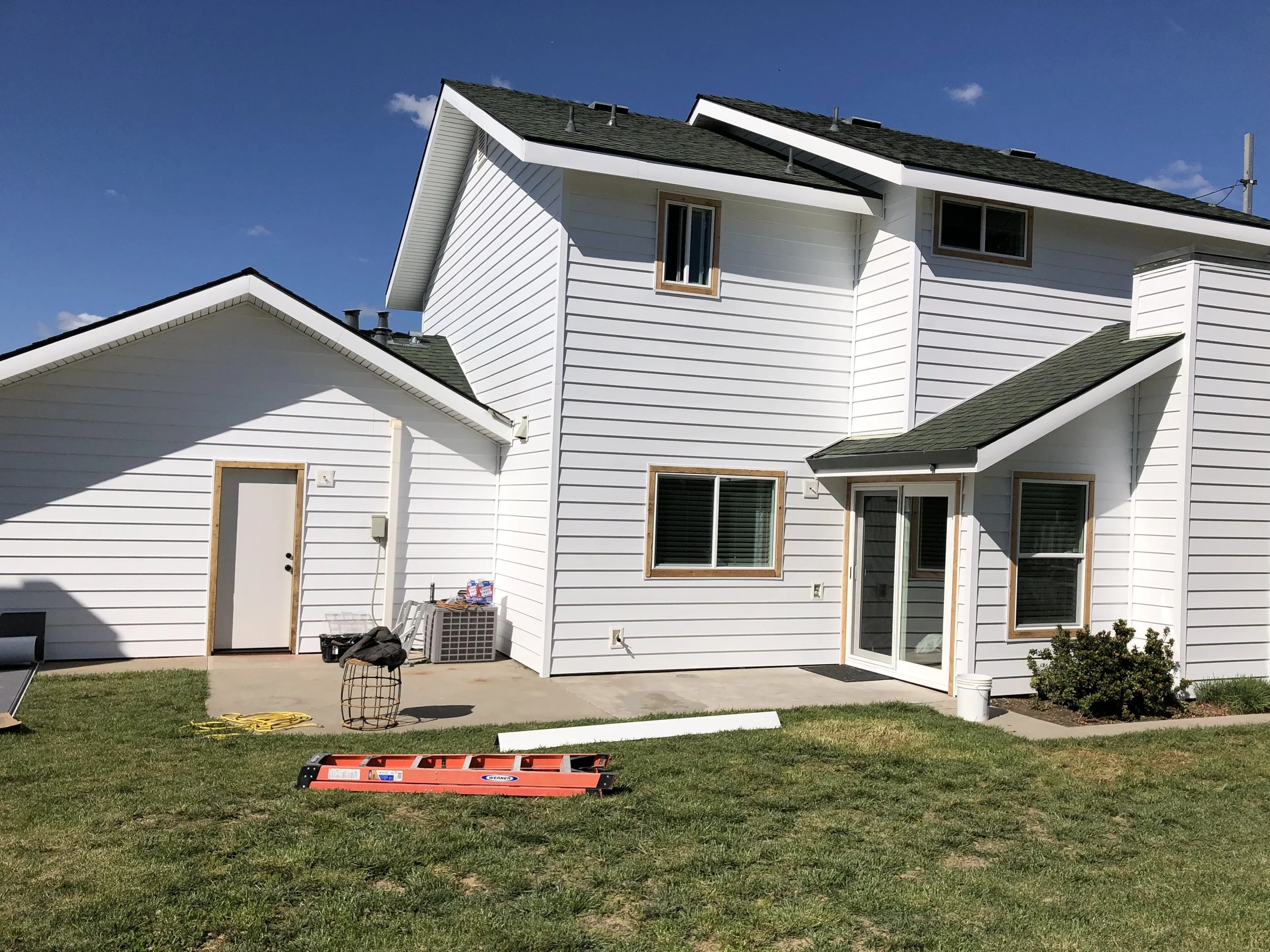
This is our premium vinyl siding product that we install on most of our Bay area homes. Built to last the sun, rain, humidity, and cracking! Each individual plank of siding is backed with about an inch of styrofoam material.
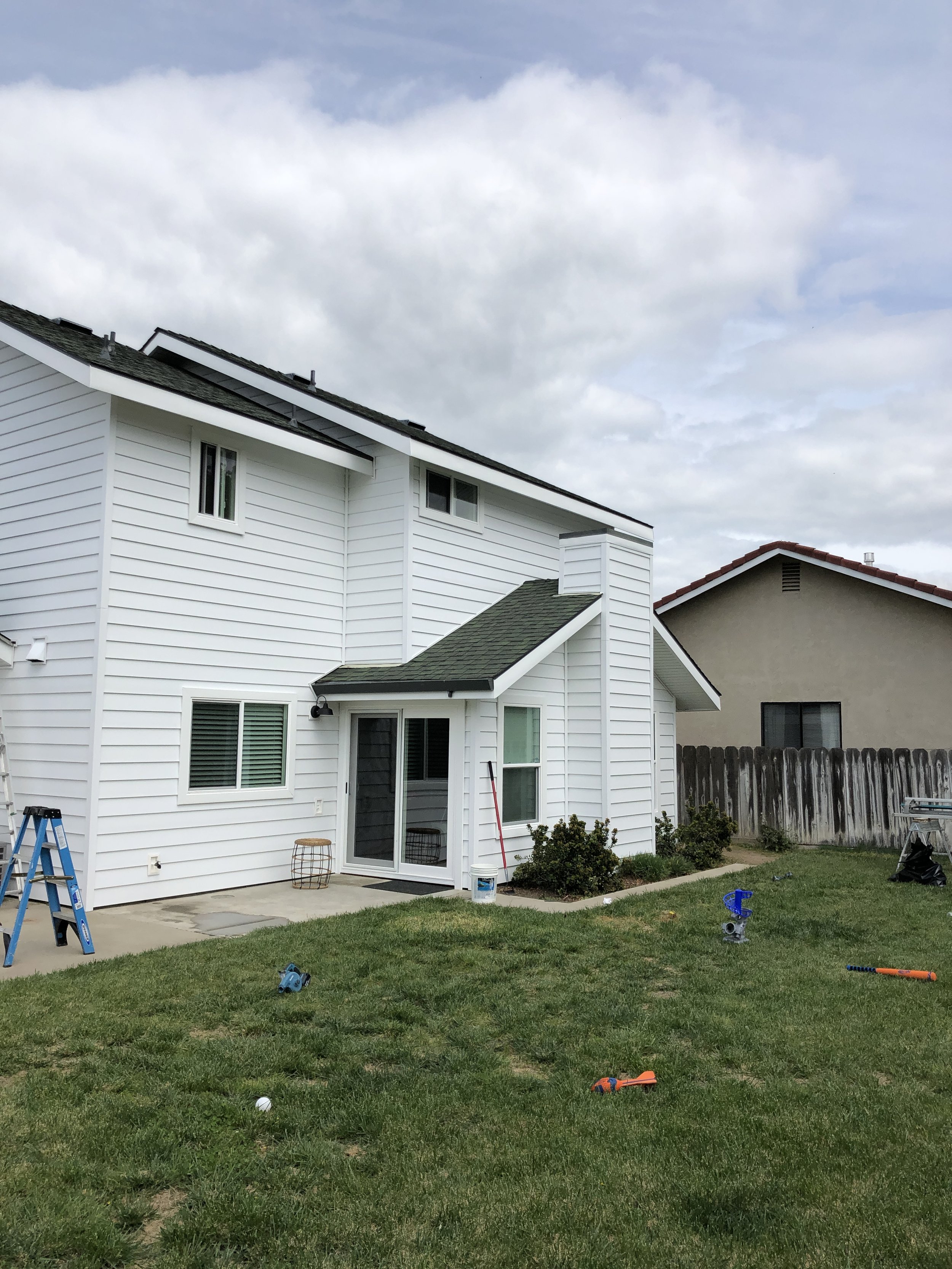
Here is the completed window trim look! We create our own aluminum shapes molded on-site to fit each window seamlessly, it’s then followed with caulking for a lifetime moisture seal. This is where you get the final popping aesthetics!
Fiber cement siding replacement pricing
For fiber cement siding replacement, many East Bay homeowners are realistically looking at around $27,000 to $50,000+ depending on the home, access, trim details, paint scope, and whether damaged material is uncovered during tear-off.
More architectural homes with a lot of detail, window trim, corner treatment, and custom finish work can push past that.
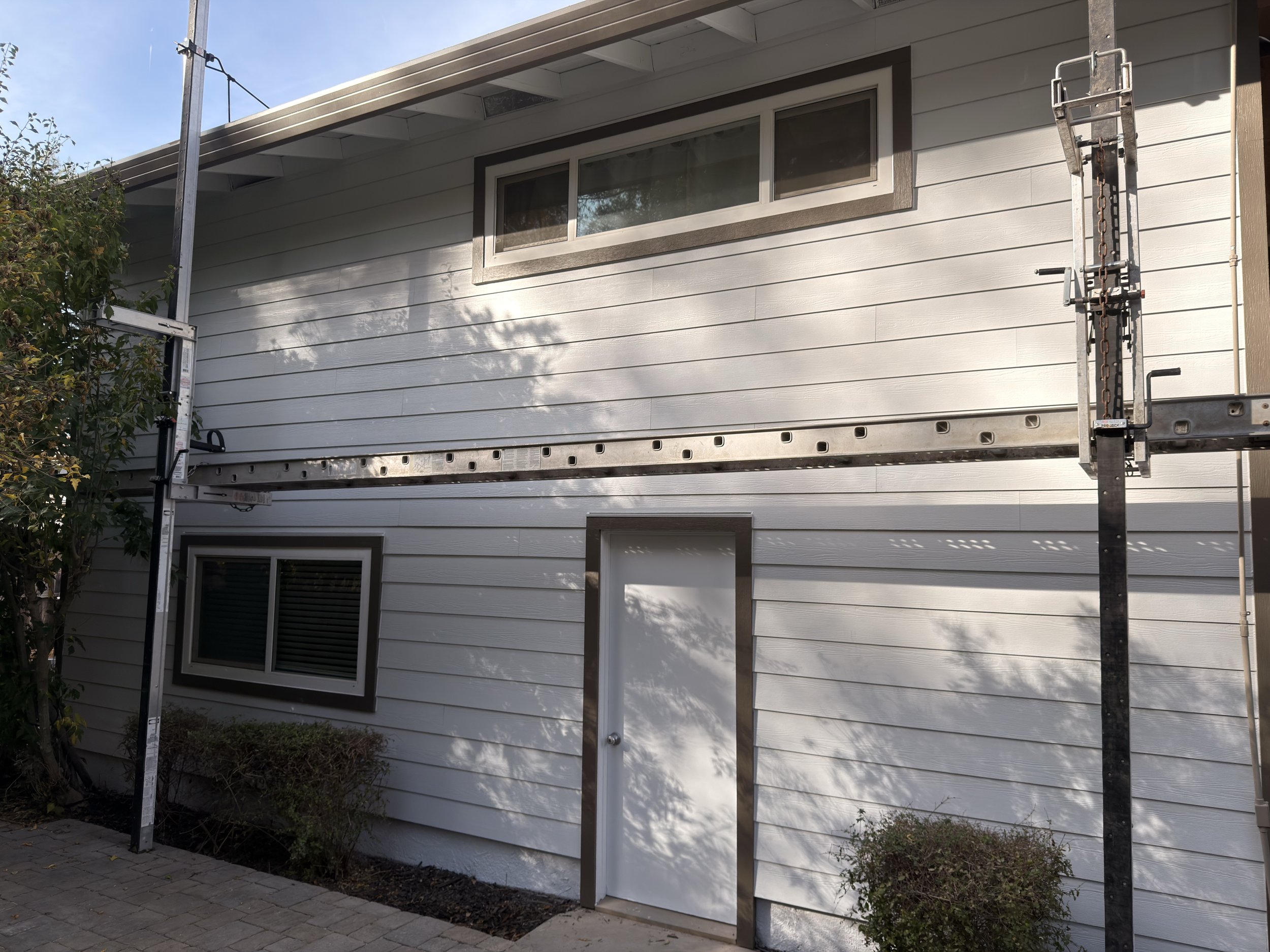
This is our most popular siding, the James Hardie fiber cement product. It’s important to find a contractor that pays attention to a detailed installation, it’s easy to get lost with big gaps and misaligned walls where joints look droopy.
Repair pricing
Repair projects vary more than people think. A smaller repair may fall into the low thousands, while larger repairs involving multiple elevations, trim replacement, or hidden damage can climb quickly once the wall is opened up.
That lines up with broader 2026 market data. National cost publishers still show vinyl and fiber cement in wide installed ranges depending on scope, labor, and finish. Modernize lists fiber cement at roughly $4.70 to $8.50 per square foot and notes vinyl around the mid-single digits per square foot, while HomeAdvisor’s broader installed ranges remain roughly $3 to $12 per square foot for vinyl and $5 and up for fiber cement. Remodeling’s Cost vs. Value report also keeps typical siding replacement projects in the high teens to low-$20,000s nationally before local scope, labor, and finish expectations push totals higher in stronger-cost markets.
That is why homeowners in Walnut Creek, San Ramon, Pleasanton, Livermore, and the Berkeley area should not assume the cheap online number is what their actual house will cost. The real number depends on the actual scope, not the headline average.
Why one siding quote can be way lower than another
This is one of the biggest reasons people get frustrated when comparing bids.
Two companies can both say they are quoting “siding replacement,” but they may not be including the same work at all.
One bid might include:
Full tear-off
More trim replacement
Moisture-damaged wood replacement
Cleaner flashing details
Better finish work
A more complete scope around transitions and penetrations
Another bid may only be pricing the visible siding itself.
So when one price is lower, it does not always mean it is a better deal. Sometimes it just means it is a smaller job on paper.
That’s why apples-to-apples scope matters so much.
Best siding options for East Bay homes
There is no one perfect siding product for every house. The right fit depends on your budget, your style goals, and how much maintenance you want long term.
Vinyl siding
Vinyl siding is a strong option for homeowners who want a clean appearance, better weather protection, and less ongoing maintenance.
Why people like it:
Lower maintenance than many painted exteriors
Consistent clean look
Good color and profile options
Strong overall value for many full-home projects
Less stress about constant repainting
For homeowners who want their house to look good without signing up for endless upkeep, vinyl can be a very smart choice.
Fiber cement siding
Fiber cement is usually chosen by homeowners who want a more solid, premium-looking exterior with crisp lines and stronger architectural presence.
Why people choose it:
High-end curb appeal
Excellent fit for many traditional and upgraded homes
Pairs well with detailed trim
Great for homeowners who want a painted, more custom-looking exterior
When appearance is a major priority, fiber cement is often part of that conversation.
Choosing the right one
The best answer usually comes down to this:
If your priority is lower maintenance and strong value, vinyl often makes a lot of sense.
If your priority is a more premium architectural finish, fiber cement often becomes the better fit.
The right contractor should be able to explain that without making the conversation feel complicated.
Walnut Creek siding replacement
Walnut Creek homeowners usually care about both performance and appearance.
A lot of homes here are not just replacing siding because something failed. They also want the home to look more current, more polished, and more valuable from the street.
That means the right project in Walnut Creek often comes down to:
A cleaner exterior finish
Better long-term protection
Trim details that actually sharpen the look of the house
A material choice that does not create unnecessary upkeep
Walnut Creek also has a specific permit noting that vinyl siding over existing siding is treated differently than removing the old siding first, and homeowners are directed to verify planning and permit requirements before work begins.
San Ramon siding replacement
San Ramon homeowners often want the house to stay looking sharp without turning exterior ownership into a maintenance hobby.
That is why lower-maintenance siding choices are often especially attractive here.
A lot of San Ramon projects center around:
Updating the look of the house
Reducing ongoing upkeep
Keeping lines clean and finished
Making sure the exterior feels updated without overcomplicating it
San Ramon routes building permit work through its Permit Center, and some exterior changes may also need planning or architectural review depending on the property and scope.
Pleasanton siding replacement
Pleasanton homeowners often want the result to feel timeless.
A siding project here is not always just about stopping damage. A lot of the time it is about making the home feel complete again.
That can mean:
Replacing worn siding
Cleaning up trim lines
Improving transitions around windows and doors
Bringing the whole exterior together visually
Pleasanton city materials also note that permits are required for permanent improvements including siding in some regulated contexts, which is a good reminder not to assume permit rules without checking the actual project scope and property conditions.
Livermore siding replacement
Livermore homeowners often have to think more about heat and sun exposure.
On homes with heavy afternoon sun, exterior materials can take more abuse over time. That does not automatically mean one product fails and another does not. It means installation quality, trim detailing, moisture control, and material fit matter even more.
A strong Livermore siding project should focus on:
Durability
Proper weather detailing
A smart material choice for the house
Reducing future maintenance, not just replacing what is visible
Livermore city guidance also states that permits are required for permanent improvements including siding, which reinforces the need to verify local requirements early instead of treating permits like an afterthought.
Berkeley-area siding replacement
Berkeley-area homes can be a little more nuanced.
A lot of homeowners here care deeply about preserving the character of the house, and that makes sense. On older or more distinctive homes, the wrong siding decision can make the exterior feel generic fast.
That is why Berkeley-area projects often need more attention to:
Existing trim proportions
Architectural style
Reveal sizes and board profiles
How the home looks up close, not just from the curb
Berkeley’s building permit guidance is also pretty clear: all construction work and most repairs require permits unless specifically exempted, and its permit forms explicitly reference in-kind repair or replacement including siding.
The parts of the house that usually fail first
A lot of homeowners think the main siding field is the first thing to go.
A lot of the time, it is not.
Usually the first failures show up in the vulnerable details:
Window trim
Corner boards
Fascia
Lower wall edges
Horizontal transitions
Areas where flashing was weak or missing
That is why good siding work is never just about the face material. The details are where a lot of bad jobs reveal themselves.
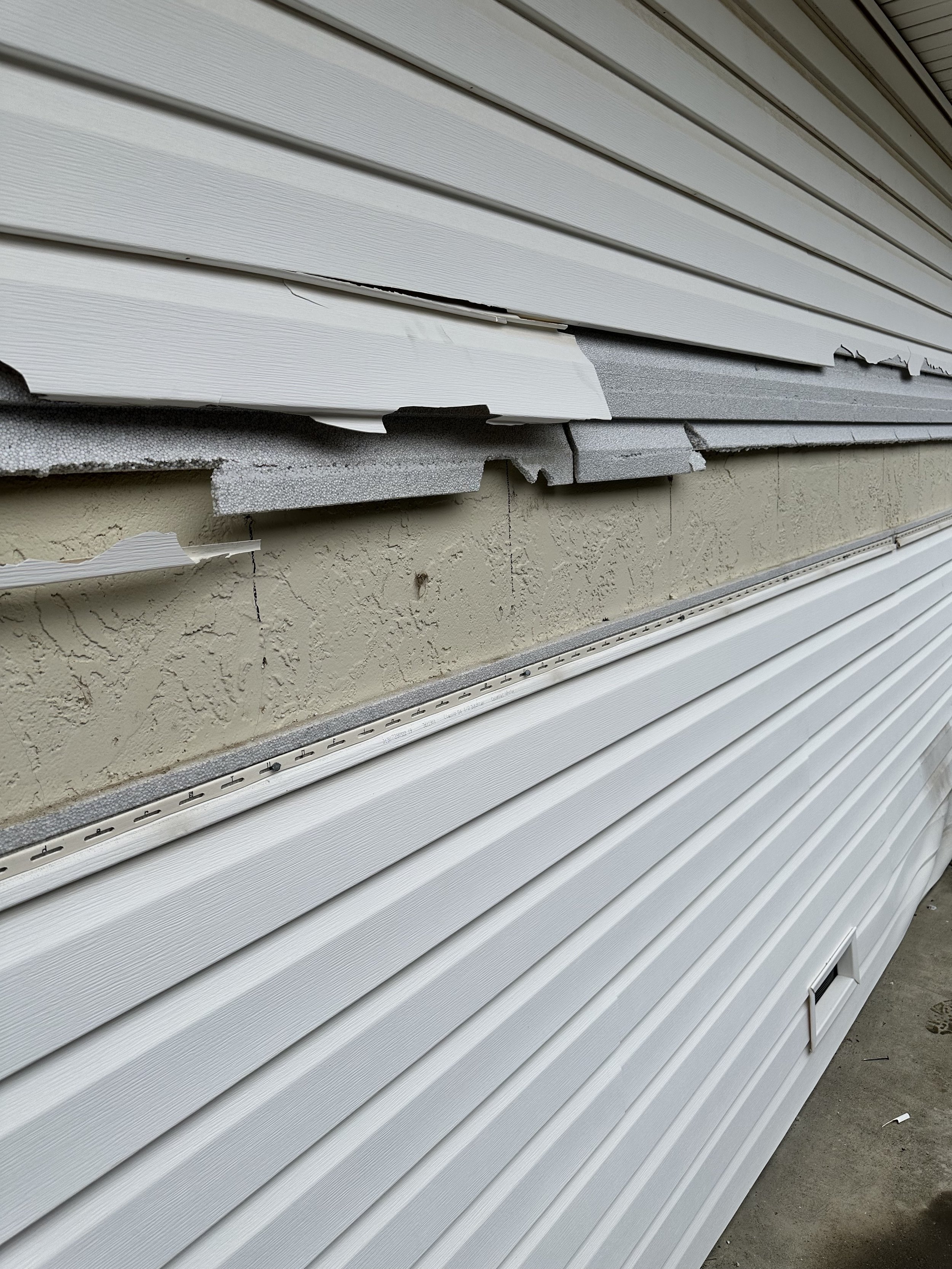
Damaged siding can occur from high winds, storms, trees falling or external protrusion.
Questions homeowners ask before replacing siding
How do I know if there is rot behind my siding?
You usually cannot confirm the full extent just by looking from the driveway.
But warning signs include soft trim, swollen edges, bubbling paint, recurring separation at joints, and moisture-prone areas that never seem to stay fixed.
Sometimes the visible issue is minor. Sometimes it is the tip of the iceberg.
Is repainting enough, or do I need replacement?
If the siding is still structurally sound and the issue is mostly cosmetic, repainting may be enough.
If you are dealing with softness, recurring moisture issues, swelling, repeated failure, or hard-to-maintain materials, replacement is usually the smarter long-term move.
Does new siding help home value?
It can absolutely improve curb appeal and buyer perception. Even when resale is not the immediate goal, homeowners usually want the same end result:
A cleaner look
Less maintenance
Better protection
More confidence in the condition of the home
What should a siding estimate include?
A real siding estimate should clearly explain:
What material is being installed
What is being removed
What trim work is included
How hidden damage is handled
How transitions and flashing are treated
What finish work is included
What is excluded
A clean estimate usually means a cleaner project.
Our approach at VISION SIDING
We try to keep the process simple.
We look at the actual house, not just the photos. We explain what we see. We tell you whether repair makes sense, whether replacement makes more sense, and which material is probably the better fit for your goals.
Sometimes that means vinyl.
Sometimes that means fiber cement.
Sometimes that means the smartest answer is not the most expensive one.
Homeowners usually do not need more pressure. They need more clarity.
That is how we like to handle it.
Final thoughts on siding replacement in the East Bay
If your siding is starting to look tired, warped, soft, outdated, or expensive to maintain, it is usually better to have it looked at before the damage spreads.
A good siding project should do three things:
Protect the home better
Look noticeably cleaner
Reduce the stress of constant upkeep
If you are in Walnut Creek, San Ramon, Pleasanton, Livermore, or the Berkeley area and want a clear opinion on whether your home needs siding repair or full replacement, Vision Siding is here to help.
FAQ: Siding Replacement in Walnut Creek, San Ramon, Pleasanton, Livermore, and the Berkeley Area
How much does siding replacement cost in the East Bay?
For many East Bay homes, full siding replacement often starts in the $20,000s and can move into the $30,000s, $40,000s, or more depending on material, home size, trim detail, hidden damage, and finish scope. Broader 2026 cost guides still show wide national installed ranges, but real East Bay pricing is usually driven by actual project scope and local labor conditions.
Is vinyl siding cheaper than fiber cement?
Usually yes. Broader 2026 cost data still shows fiber cement pricing above vinyl in most installed scenarios, especially once labor and finishing are included.
Do I need a permit for siding replacement?
Sometimes yes, and the answer depends on city and project scope. Berkeley says most construction work and repairs need permits unless specifically exempted. Walnut Creek notes special treatment for vinyl siding over existing siding versus removing existing siding first. Livermore states permits are required for permanent improvements including siding, and San Ramon routes this work through its Permit Center.
What are the signs my siding is failing?
Common signs include peeling paint, warping, swelling, bubbling, soft trim, repeated caulk failure, and areas that keep needing repair.
Is repair better than replacement?
Repair makes sense when the damage is limited. Replacement usually makes more sense when multiple sides are failing, moisture issues keep returning, or the home is becoming expensive to maintain.
What part of the house usually fails first?
Usually not the main siding field. It is more often trim, corners, lower edges, window surrounds, and transition areas.
What is the best siding for hot East Bay weather?
The best siding depends on the home, but most homeowners are looking for durability, lower maintenance, and a look that fits the house. Sun exposure, trim design, and installation quality matter just as much as the product itself.
Does new siding improve curb appeal?
Yes. New siding can dramatically improve the look of a house, especially when trim, color, and overall design are handled well.