James Hardie Siding Colors: A Complete Guide for Sacramento & Bay Area Homes
If you are looking at James Hardie siding, there is a good chance the material itself was the easy decision.
Choosing the color is where things get difficult.
Arctic White or Cobble Stone? Iron Gray or Night Gray? Boothbay Blue or Evening Blue? Should the trim match the siding or contrast with it? Should you choose factory-finished ColorPlus® siding or order primed James Hardie siding and have it painted after installation?
At VISION SIDING, we help homeowners throughout Greater Sacramento and the Bay Area make these decisions as part of real siding replacement projects. We are a family-owned siding contractor with more than 30 years of industry experience, and siding is not something we offer on the side. It is the core of what we do.
Our family and crew handle the actual siding work, from removal and wall preparation to dry rot repair, weatherproofing, trim, soffit, fascia and final installation. We install James Hardie® siding throughout Sacramento, Folsom, Fair Oaks, Elk Grove, Roseville, Granite Bay, El Dorado Hills and surrounding communities, as well as Bay Area cities including Walnut Creek and other East Bay communities.
And because we work on these homes in person, we can tell you something that a small online color square cannot:
The color you see on a screen is not necessarily the color you are going to see on your house.
Northern California sunlight, shade, roof color, windows, landscaping, architecture and even which direction your home faces can completely change the way James Hardie siding colors appear.
This guide breaks down the most popular James Hardie colors, ColorPlus® Technology, primed versus factory-finished siding, trim combinations, darker and lighter colors, and what Sacramento and Bay Area homeowners should consider before making a final choice.
Why Do So Many Homeowners Choose James Hardie® Siding?
Before getting into the colors, it is worth understanding why James Hardie is one of the siding products we regularly discuss with homeowners at VISION SIDING.
Hardie® siding is made from fiber cement and is designed to provide the appearance and architectural detail homeowners want without many of the vulnerabilities associated with traditional wood siding.
It is resistant to moisture-related damage, does not appeal to termites and other wood-destroying pests, and is noncombustible. That last characteristic is especially relevant for many Northern California homeowners who are paying closer attention to the materials used on the exterior of their homes.
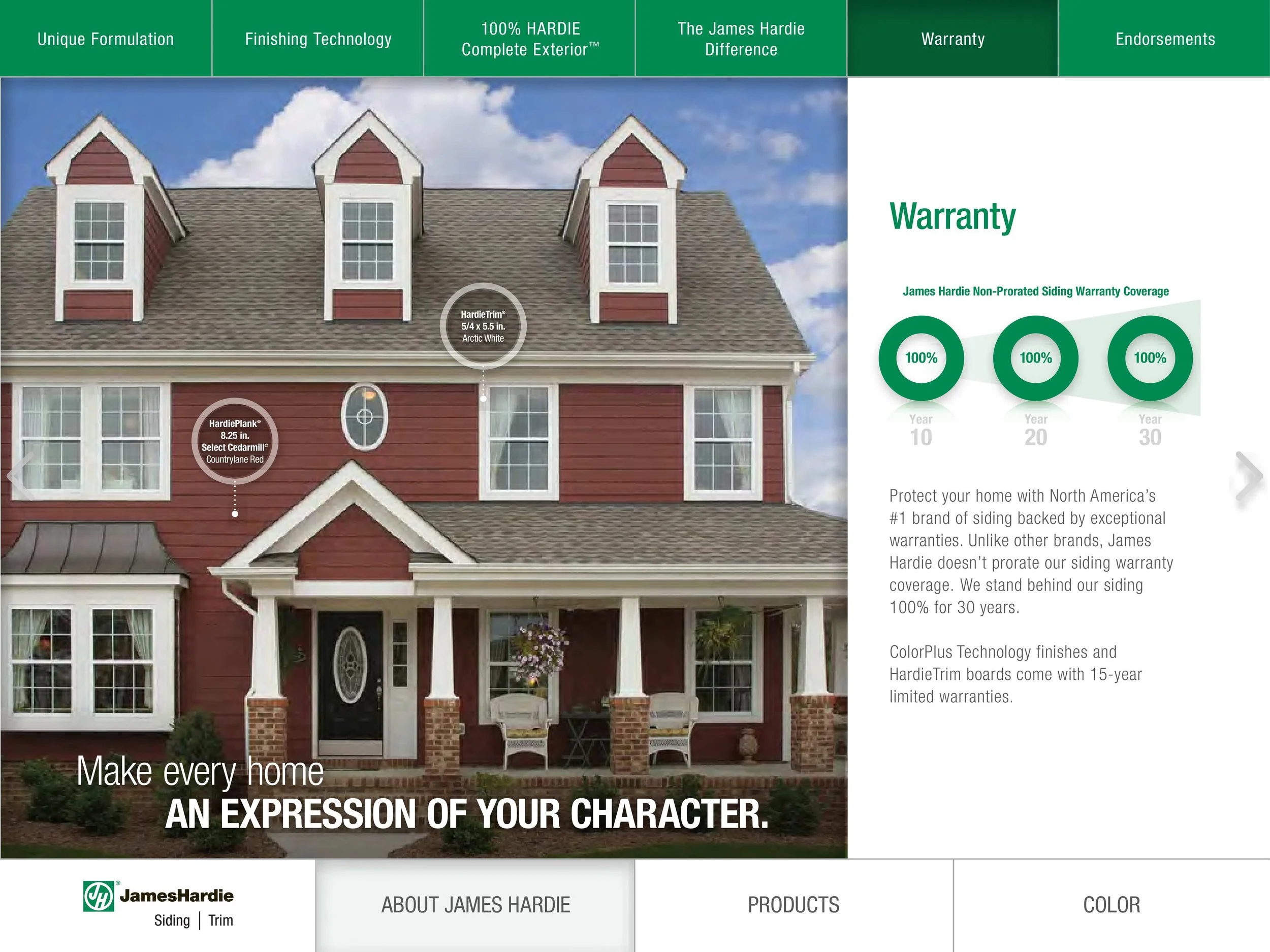
James Hardie also offers a 30-year non-prorated limited substrate warranty on its fiber cement siding products.
Then there is the reason you probably found this article in the first place:
The siding looks good.
HardiePlank® lap siding can give a home a clean traditional exterior. Hardie® Panel can create vertical siding and board-and-batten designs. HardieShingle® can add texture to Craftsman, cottage and traditional homes. Those profiles can also be combined to create a much more custom exterior.
And when you add the James Hardie color options, trim combinations and ColorPlus® finishes, there are a lot of different directions you can take the house.

What Colors Does James Hardie® Siding Come In?
If you have been searching for a James Hardie color chart, Hardie board colors, HardiePlank colors, or James Hardie ColorPlus colors, you may have noticed that there is not one universal list of colors for every product.
James Hardie offers factory-finished siding through its ColorPlus® Technology collections, and exact color availability can vary depending on the siding product and region.
The Statement Collection® includes a curated selection of popular colors, while the Dream Collection® expands the possibilities considerably with nearly 700 ColorPlus finish options.
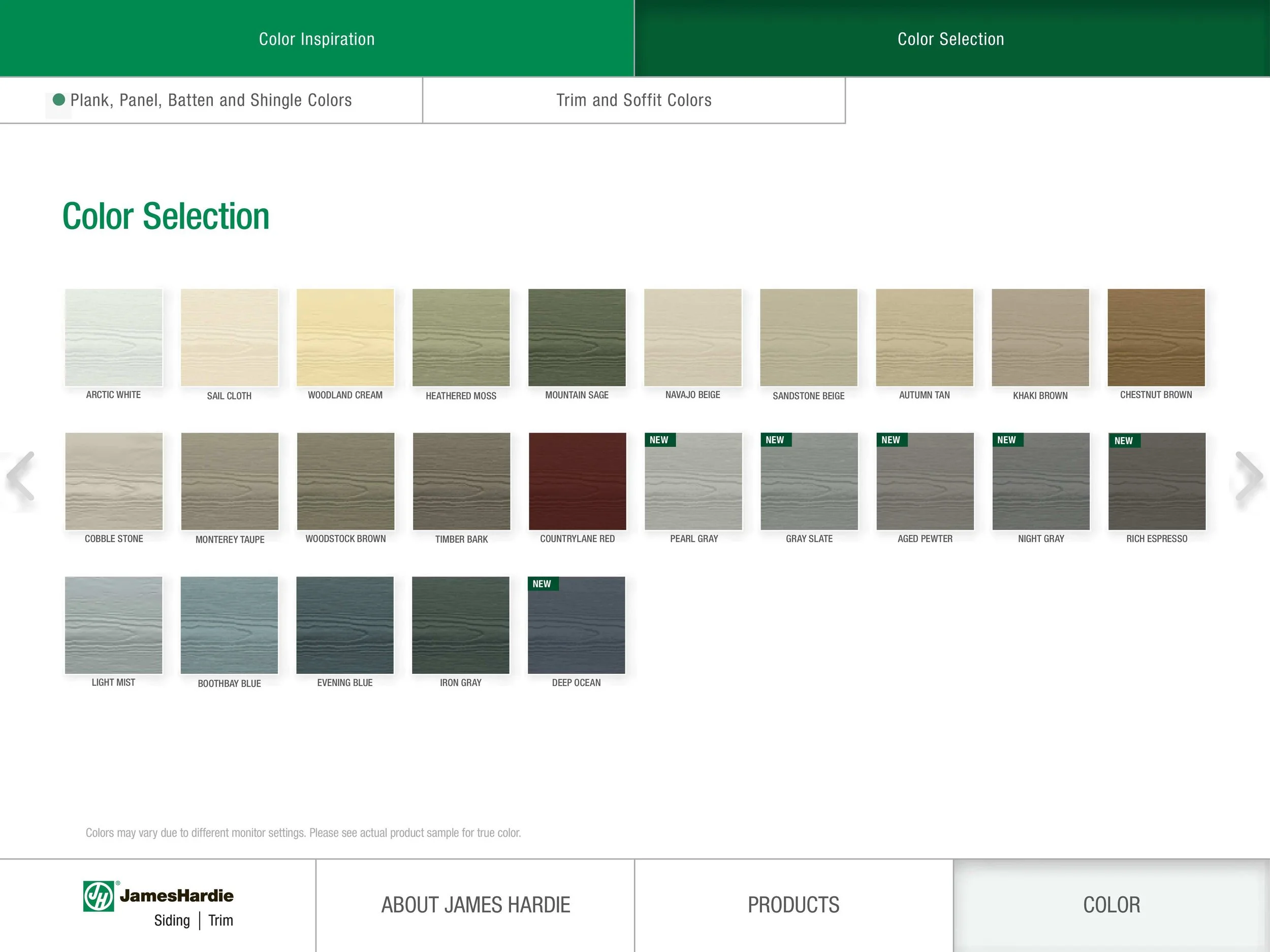
Some of the most popular James Hardie siding colors homeowners compare include:
Arctic White
A clean, bright white that pairs well with black, bronze, brown, or contrasting trim.
Cobble Stone
A warm, light neutral that works well with white trim, brown accents, and warmer exterior finishes.
Monterey Taupe
A richer warm taupe that pairs nicely with cream, white, dark brown, natural wood, and stone.
Khaki Brown
An earthy brown that works well with white, cream, and darker brown accents.
Timber Bark
A deep natural brown commonly used for both siding and contrasting trim.
Pearl Gray
A soft, light gray that pairs well with white, charcoal, and darker gray accents.
Light Mist
A very light, cool gray that works well with white trim and blue-gray exterior details.
Gray Slate
A medium gray that pairs well with white, black, and natural wood.
Aged Pewter
A muted, deeper gray that can work especially well with white trim, black accents, and stone.
Night Gray
A dark, sophisticated gray that pairs beautifully with Arctic White, black accents, and natural wood.
Iron Gray
A deep charcoal gray that works well with white, black, bronze, and natural wood details.
Boothbay Blue
A muted blue-gray that pairs especially well with white trim, light gray, and natural wood.
Evening Blue
A deeper blue that works well with white, gray, and darker trim colors.
Mountain Sage
A muted, earthy green that pairs well with cream, white, brown, stone, and natural wood tones.
Not every James Hardie color is available in every siding profile or immediately stocked in every Northern California market. Before designing your entire exterior around one specific color, VISION SIDING can help verify which James Hardie colors and products are available for your Sacramento or Bay Area siding project.
James Hardie Arctic White Siding
Arctic White is probably one of the first colors homeowners notice when looking through James Hardie siding photos.
It is a crisp, clean white and can work extremely well on modern farmhouse homes, contemporary exteriors and traditional homes that need a major visual refresh.
White Hardie siding can also make architectural details more noticeable. Black windows, dark gutters, wood doors, stone accents and darker trim all stand out dramatically against Arctic White.
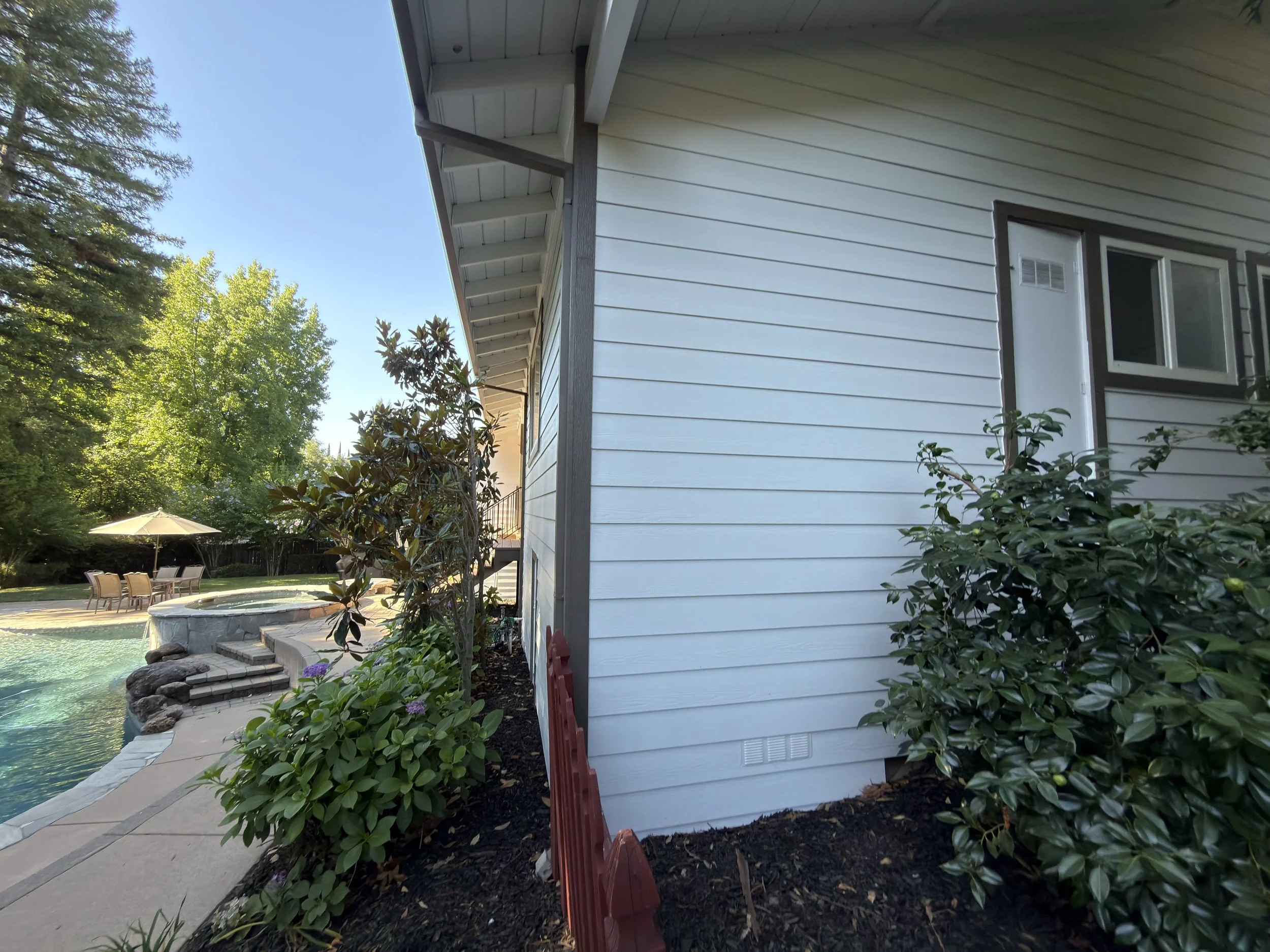
We have firsthand experience with this combination at VISION SIDING. On a recent project in Fair Oaks, California, we installed Select Cedarmill® James Hardie Plank siding in Arctic White with Timber Bark James Hardie trim.
That is exactly the kind of combination homeowners should consider before automatically pairing white siding with white trim. Contrasting the body and trim can completely change the character of the exterior.
One thing to consider in Sacramento is the amount of direct sunlight your home receives. Arctic White can look extremely bright on a fully exposed elevation in strong afternoon sun. Look at an actual sample against the home before making the final choice.
James Hardie Cobble Stone Siding
Cobble Stone is one of the strongest options for homeowners who want something light but do not necessarily want a bright white house.
It is a warmer neutral and can work particularly well with stone, warmer roofing, natural wood doors and traditional landscaping.
For Sacramento-area ranch homes, Craftsman-inspired homes and traditional suburban architecture, Cobble Stone can update the exterior without making the home feel overly modern.
It is also worth comparing directly against Monterey Taupe. Homeowners frequently narrow their decision to those two because both provide warmer neutral exteriors without committing to brown or gray.
James Hardie Monterey Taupe Siding
Monterey Taupe gives you more depth than a very light neutral while remaining relatively easy to coordinate with the rest of the home.
It works especially well when a property already has fixed warm elements that are not being replaced, such as stone veneer, a brown or mixed-tone roof, stained wood or warmer masonry.
This is an important point when selecting any siding color:
Do not choose the siding by itself.
The roof, windows, gutters, garage door, stone, brick and other permanent elements are already part of your color palette.
Replacing your siding is a major opportunity to redesign the house, but unless those other materials are changing too, the new siding needs to work with them.
James Hardie Iron Gray Siding
If you are searching for dark James Hardie siding colors, Iron Gray belongs near the top of the list.
Iron Gray creates a dramatic charcoal exterior that works especially well with contemporary architecture, modern farmhouses and homes with clean architectural lines.
James Hardie selected Iron Gray as its 2026 Color of the Year, which also shows how much darker exteriors have moved into the mainstream.
Pair Iron Gray with Arctic White and you get high contrast.
Pair it with black or similarly dark accents and the house becomes much more modern and monochromatic.
Pair it with natural wood and you can soften the dark siding while keeping the exterior contemporary.
For a large two-story home, however, remember that a dark color covers a lot of visual space. We strongly recommend seeing a full-size siding sample outside rather than choosing a dark gray from your phone.
James Hardie Night Gray vs. Iron Gray
This is another comparison homeowners make when searching for James Hardie gray siding colors.
Both provide a substantially darker exterior than Pearl Gray or Light Mist, but the overall impression can be different depending on the house and surrounding finishes.
If you are considering Night Gray or Iron Gray, put the samples directly beside the roof, windows and trim.
Then look at them more than once.
Morning light, direct afternoon sun and evening shade can make a surprisingly large difference.
This matters throughout Northern California, but especially in the Bay Area where two homes only a relatively short distance apart can experience very different light and weather conditions.
James Hardie Boothbay Blue Siding
Boothbay Blue is one of the best-known James Hardie blue colors.
Rather than looking like a bright blue house, Boothbay Blue has a more subdued blue-gray appearance. That makes it easier to use across traditional, Craftsman and coastal-inspired architecture.
White trim is the obvious pairing, but it is not the only one.
Natural wood, darker accents and certain gray tones can all produce a more customized exterior.
For Bay Area homes, especially properties where the homeowner wants some color without making the house overwhelmingly bold, Boothbay Blue deserves a physical sample comparison.
James Hardie Evening Blue Siding
If Boothbay Blue feels too light, Evening Blue moves the exterior in a deeper and more dramatic direction.
It can look excellent with white trim, but darker trim can completely change its character.
A deeper blue is also an option for homeowners who like the visual weight of charcoal siding but want something with more color.
When people search for blue James Hardie siding colors, we would compare these blues outside rather than relying on online renderings.
James Hardie Mountain Sage Siding
Green exteriors have become increasingly popular, and Mountain Sage gives homeowners a way to bring an earthier color into the exterior without using an extremely bright green.
This color can pair especially well with natural wood, stone, warm landscaping, dark bronze and traditional white trim.
Mountain Sage can make sense around both Sacramento and the Bay Area, but landscaping becomes particularly important with green siding.
Put the sample near the actual plants, trees, stone and hardscape surrounding the home. A siding color is never viewed in isolation once it is installed.
Light James Hardie Colors vs. Dark James Hardie Colors
There is no universal answer to whether light or dark Hardie siding looks better.
It depends on what you are trying to accomplish.
A lighter exterior can make a home feel clean, open and timeless. Colors such as Arctic White, Cobble Stone, Pearl Gray and Light Mist can also provide an excellent background for architectural details and darker accents.
Dark siding such as Iron Gray, Night Gray or deeper blues creates more visual weight and can make simple elevations look considerably more dramatic.
The architecture matters too.
Dark siding on a home with multiple rooflines, bump-outs and siding orientations can emphasize those shapes. The same color on a large uninterrupted wall may feel very different.
This is one reason VISION SIDING does not believe choosing siding should be reduced to finding the most popular color online.
We want the siding to fit the actual house.
The Best James Hardie Colors for Sacramento Homes
Sacramento homeowners should pay particular attention to direct sunlight.
Homes in Sacramento, Folsom, Roseville, Rocklin, Elk Grove, Fair Oaks, Granite Bay and El Dorado Hills can receive powerful direct sun across large portions of the exterior.
That affects how a color is perceived.
A shade that looks deep and rich indoors can look considerably brighter outside. Light siding can become extremely crisp in direct sun, while subtle differences between neutral colors may become easier to see.
For many Sacramento homes, we like starting the conversation with the architecture and existing materials rather than declaring one color the winner.
A warm ranch home with a brown roof may call for an entirely different palette than a modern Folsom home with black windows and a charcoal roof.
The color needs to belong to the house.
The Best James Hardie Colors for Bay Area Homes
The Bay Area is not one climate or one architectural style, which makes color selection particularly interesting.
A house in Walnut Creek or another warmer inland East Bay community will experience color differently than a home closer to San Francisco or the coast.
The architecture also ranges from Craftsman homes and mid-century houses to contemporary additions, hillside homes and older properties with detailed trim.
That opens the door to a wide variety of James Hardie colors.
Muted blues and grays can work beautifully on traditional Bay Area homes. Darker colors can make contemporary architecture more dramatic. Warm neutrals can complement natural landscaping, stone and wood. HardieShingle and lap siding combinations can also be used where the homeowner wants more texture.
VISION SIDING serves homeowners in both Greater Sacramento and the Bay Area, so when we discuss colors we are not trying to force the exact same exterior onto every Northern California house.
We want to know where the house is, what surrounds it and what parts of the exterior are staying.
James Hardie ColorPlus® Technology: What Does It Mean?
A lot of homeowners search for James Hardie prefinished siding, prepainted Hardie board or James Hardie ColorPlus colors without realizing these searches generally lead back to the same finishing system.
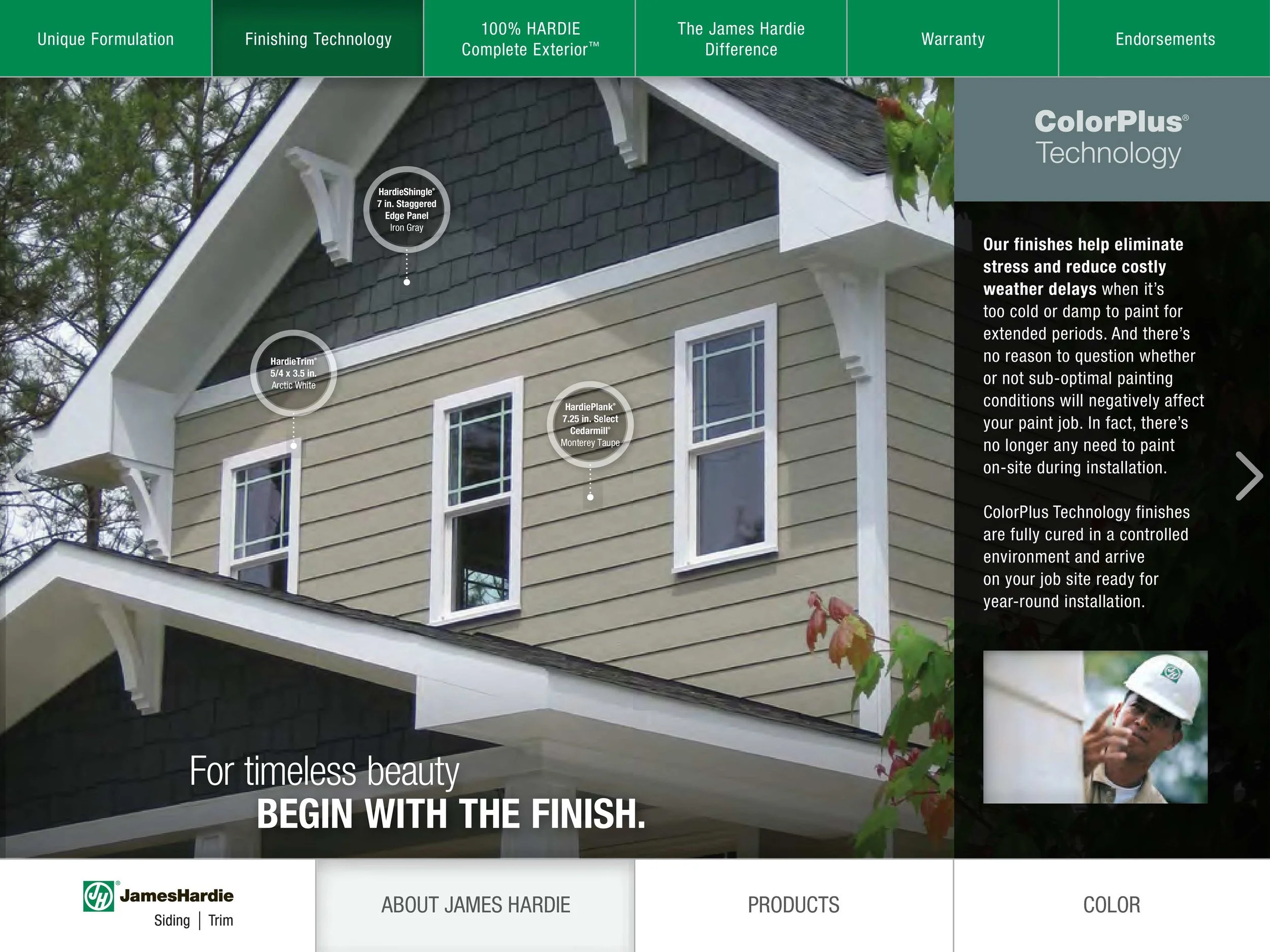
ColorPlus® Technology is James Hardie's factory-applied finish.
Instead of installing primed siding and then painting the entire exterior in the field, the finish is applied and cured in a controlled manufacturing environment.
That allows for consistent coverage and creates a finish engineered to resist UV-related fading as well as peeling, cracking and chipping.
James Hardie currently backs ColorPlus finishes with a 15-year limited finish warranty covering paint and labor against qualifying peeling, cracking and chipping.
For Sacramento homeowners dealing with intense summer sunlight and Bay Area homeowners who want a finished exterior without adding a complete field-painting phase to the siding installation, ColorPlus can be a very attractive option.
ColorPlus vs. Primed James Hardie Siding
You do not have to choose a factory James Hardie color.
Hardie siding is also available primed for paint.
This gives homeowners another path: select the siding profile you want and choose a field-applied exterior paint color separately.
That can make sense when you have a very specific color in mind that does not exist in the available factory-finished selection.
ColorPlus, on the other hand, gives you a finished James Hardie product coming from the factory in the selected color.
Neither decision should be made solely because one option sounds more premium.
The better choice depends on the desired color, project budget, availability, design and whether you want the house painted as part of the installation.
At VISION SIDING, we can discuss both approaches when putting together the siding scope.
What Is the James Hardie Dream Collection?
If you love Hardie siding but cannot find the exact shade you want in the standard ColorPlus choices you have seen, do not assume you have reached the end of the options.
The James Hardie Dream Collection® expands the factory-finished palette to nearly 700 ColorPlus finishes.
That is an enormous range compared with selecting from a small group of common colors.
There is a tradeoff: Dream Collection products are made to order and may involve additional cost and production time.
For a homeowner trying to create a very specific exterior, however, it can be worth exploring before abandoning the idea of factory-finished Hardie siding altogether.
How to Choose a James Hardie Siding Color
Our biggest piece of advice is simple:
Get the decision off the screen and onto the house.
Online photos are useful for narrowing your choices. Renderings are useful for understanding the overall concept. Neither replaces seeing a physical sample against the permanent materials on your property.
Put the sample beside the roof.
Put it beside the windows.
Look at it next to your stone or brick.
Check it from the street.
Look again when that side of the house is in full sun.
Then look again when it is shaded.
If you are choosing between something like Arctic White and Cobble Stone, you may immediately notice that one works better with the roof.
If you are deciding between Boothbay Blue and Evening Blue, the amount of sunlight on the elevation may make the decision much easier.
If you are deciding between Monterey Taupe and a gray, the undertones in existing stone or masonry may point you in the right direction.
That is how we prefer to approach siding color at VISION SIDING.
Not as a random swatch.
As part of the complete exterior.
Do Not Forget About James Hardie Trim Colors
The siding body is only part of the design.
Trim can completely change the finished house.
Matching siding and trim can create a smoother, more contemporary appearance. High-contrast trim creates stronger definition around windows, doors, corners, fascia and architectural features.
Arctic White is an obvious accent against many darker colors, but darker trim colors including Timber Bark and Iron Gray can create equally interesting combinations on lighter siding.
Our Fair Oaks Arctic White and Timber Bark project is a good example: the darker trim gives the lighter siding much more definition than an all-white exterior would have created.
This is also where VISION SIDING's actual installation experience matters.
We are not only looking at two colors on a chart. We are thinking about where those colors end, how the trim transitions will look, how corners will be finished and how the siding profile interacts with the architecture.
Siding Color Is Important. Installation Is More Important.
You can choose the perfect James Hardie color and still end up disappointed if the siding is poorly installed.
The finished color is what everyone notices first.
What matters underneath it is the condition of the wall, sheathing, weather-resistant barrier, flashing, clearances, penetrations and trim details.
When VISION SIDING removes an old exterior, we can encounter deteriorated siding, damaged sheathing, dry rot around windows, old flashing details or previous repairs that need to be corrected before the new siding goes on.
We believe those issues should be addressed correctly instead of covered up.
James Hardie is a premium exterior product. It deserves a proper siding installation.
That is why homeowners hire VISION SIDING for more than a color change.
James Hardie Siding Contractor Serving Sacramento & the Bay Area
VISION SIDING is a family-owned Northern California siding contractor serving Greater Sacramento and the Bay Area.
We provide full siding replacement, siding repair, James Hardie fiber cement siding, trim, soffit and fascia work, exterior wood and dry rot repairs, window and door replacement and other related exterior work.
More importantly, we are the actual contractor completing the project.
You are not hiring a marketing company that sells your project to somebody else.
Our family, crew and company are responsible for the work.
Whether you are considering Arctic White HardiePlank on a Fair Oaks home, a dark Iron Gray exterior in Folsom, a warm Cobble Stone home in Sacramento or a completely different James Hardie color for a Bay Area project, we can help you work through both the appearance and the installation details.
If you are still early in the process, that is completely fine.
Sometimes the first step is simply putting a few samples against the house and figuring out which direction looks right.
Ready to See Which James Hardie Color Fits Your Home?
If you are planning a James Hardie siding replacement in Sacramento, Folsom, Fair Oaks, Elk Grove, Roseville, Rocklin, Granite Bay, El Dorado Hills, Walnut Creek or the surrounding Sacramento and Bay Area communities, contact VISION SIDING for a free in-person estimate.
We can look at the existing siding, discuss the condition of the exterior, compare siding options, go over James Hardie colors and put together a scope based on your actual home.
Your siding is going to cover nearly the entire exterior of your house.
The material matters.
The color matters.
And the people installing it matter.
VISION SIDING
Crafting Your Vision With Precision.
Frequently Asked Questions About James Hardie Siding Colors
What colors does James Hardie siding come in?
James Hardie offers a wide range of ColorPlus® Technology finishes. Commonly searched colors include Arctic White, Cobble Stone, Monterey Taupe, Timber Bark, Pearl Gray, Light Mist, Aged Pewter, Night Gray, Iron Gray, Boothbay Blue, Evening Blue and Mountain Sage. Exact availability depends on the product and region, and the Dream Collection expands the number of available factory-finished colors significantly.
What is the most popular James Hardie siding color?
There is no single color that is best for every home or every region. Arctic White, Cobble Stone, grays and blue-gray colors are frequently considered by homeowners, but the best choice depends on the roof, windows, trim, architecture, landscaping and amount of sunlight around the home.
What is the best James Hardie color for Sacramento?
Sacramento homes receive substantial direct sunlight, so physical samples are especially important. Arctic White creates a clean, high-contrast exterior, warm neutrals such as Cobble Stone and Monterey Taupe complement many traditional homes, while Iron Gray and deeper colors can create a more contemporary appearance.
What is the best James Hardie color for Bay Area homes?
There is no single Bay Area winner because the region includes dramatically different microclimates and architectural styles. Boothbay Blue, warm neutrals, grays, whites and darker contemporary colors can all work depending on the property.
Is James Hardie siding already painted?
It can be. James Hardie ColorPlus siding has a factory-applied finish. James Hardie also offers primed siding designed to receive field-applied paint.
Can James Hardie siding be painted a custom color?
Yes. Primed James Hardie siding can be field painted, which is an option for homeowners who want a color outside the available factory-finished palette.
What is the difference between ColorPlus and regular painted Hardie siding?
ColorPlus is applied and cured in a controlled factory environment before the siding arrives at the home. Primed Hardie siding is installed and then receives its finish in the field.
Does James Hardie siding come in dark colors?
Yes. Homeowners looking for dark Hardie siding often consider colors such as Iron Gray, Night Gray, Evening Blue and other deeper ColorPlus finishes.
What color is James Hardie's 2026 Color of the Year?
James Hardie's 2026 Color of the Year is Iron Gray, a deep charcoal color suited to both dramatic traditional exteriors and modern designs.
Should siding and trim be the same color?
They can be, but they do not have to be. Matching siding and trim creates a more uniform appearance, while contrasting trim defines windows, doors, corners and architectural details. The right approach depends on the design of the home.